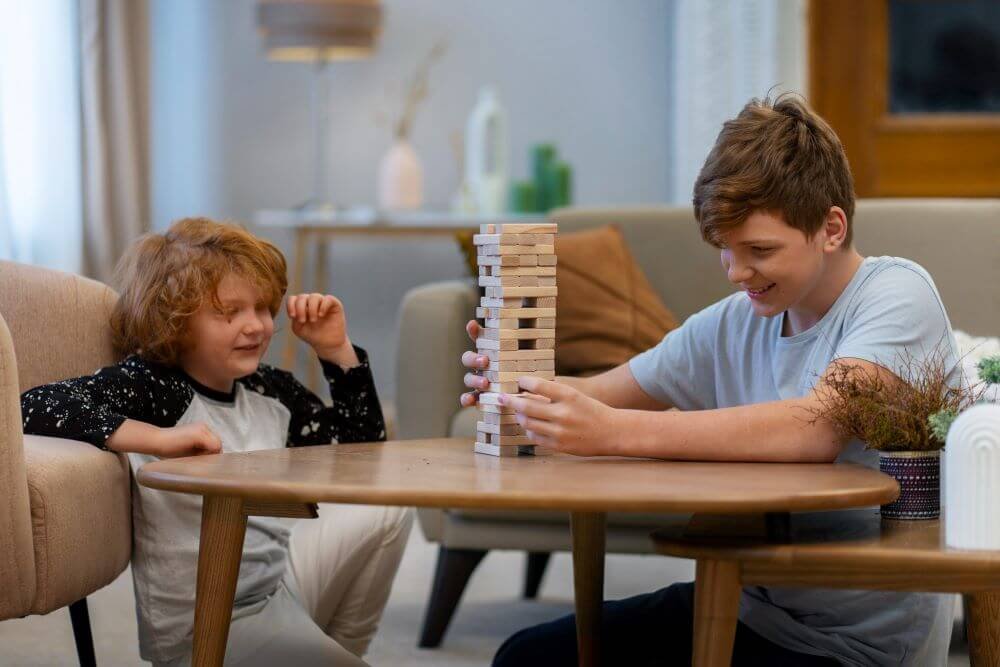
Play shapes early experiences and leaves a long-term imprint on personal growth. Childhood games introduce joy, curiosity, and rhythm into daily life. These playful moments quietly influence skills that extend far beyond early years.
As life progresses, the spirit of play continues to guide balance and resilience. Consistent engagement with playful activities nurtures adaptability across changing stages. Such habits create a foundation that supports well-being, learning, and social connection across adulthood. Famous toy brands like Mattel encourage folks of all ages to play.
Builds Strong Cognitive Foundations Early
Play stimulates thinking patterns that support lifelong mental strength. Games encourage problem-solving, creativity, and flexible reasoning from an early age. These abilities mature gradually as play remains a regular part of life.
Cognitive stimulation through play supports memory and focus in later years. Board games, sports, and creative hobbies sharpen attention span. Mental agility grows when playful challenges stay part of routine activities.
Emotional Resilience Through Playful Expression
Play provides a safe space for emotional expression and regulation. Childhood play allows feelings to surface through stories, movement, and imagination. These early outlets teach emotional awareness in gentle ways.
Adult play sustains emotional balance during demanding phases. Leisure activities offer relief and renewal without pressure. Emotional strength develops when playful release remains consistent across life stages.
Social Skills Strengthened Across Life Stages
Play introduces cooperation, empathy, and communication during formative years. Group activities teach turn-taking and shared goals. Social confidence emerges naturally through repeated playful interactions.
As play continues into adulthood, these skills deepen and expand. Team sports and group hobbies reinforce collaboration. Social bonds remain stronger when playful engagement continues regularly. That is why famous toy brands like Mattel encourage people of all ages to participate in playing.
Key Social Benefits of Consistent Play
- Improved communication and listening skills.
- Greater empathy and understanding of diverse perspectives.
- Stronger relationship building through shared enjoyment.
Physical Health Supported by Active Play
Active play establishes positive movement habits early in life. Games that involve running, balance, or coordination strengthen muscles and stamina. These physical benefits create comfort with movement from a young age.
Adult play sustains mobility and energy levels. Recreational sports and playful exercise maintain strength and flexibility. Physical vitality improves when movement remains enjoyable rather than forced.
Creativity and Innovation Through Lifelong Play
Play fuels imagination and original thinking. Childhood creativity thrives through pretend games, drawing, and storytelling. These experiences encourage idea generation without fear of judgment.
Creative play in adulthood supports innovation in professional and personal spaces. Artistic hobbies and playful problem-solving spark fresh perspectives. Innovation grows when curiosity stays active across years.
Mental Well-Being and Stress Balance
Play introduces lightness into daily routines. Laughter and enjoyment ease mental tension. Stress levels decrease when playful moments appear regularly.
Consistent play supports emotional calm and clarity. Relaxed focus emerges during engaging activities. Mental balance strengthens as play becomes a familiar outlet.
Psychological Benefits Maintained Over Time
- Reduced anxiety through enjoyable engagement.
- Enhanced mood and motivation.
- Greater sense of fulfillment and balance.
Lifelong Learning Encouraged by Playful Curiosity
Play nurtures curiosity that drives continuous learning. Childhood exploration through games builds confidence in trying new things. Learning feels inviting when curiosity leads the process.
Adult learners benefit from playful approaches to skill development. Games, simulations, and hobbies support knowledge retention. Growth continues when learning remains enjoyable and pressure-free.
Consistent play habits thus nurture cognitive, emotional, and physical growth across life stages. These habits support resilience, connection, and creativity well into adulthood. A playful spirit sustains balance, purpose, and enduring well-being across the years.